Day 1 Quest
Crafting Bolt's First Brain Block
Quest: How does a machine learn something?
Today Dad and Franklin opened the Craft Lab.
We are building an Iron Golem named Bolt. Right now his head is empty iron. Today we craft his very first brain block: a tiny artificial neuron.
Its job is to answer one question:
Should we play outside?
If we put the right blocks in the crafting table, can Bolt learn by himself?
Crafting table + furnace
World
What is the weather and homework like?
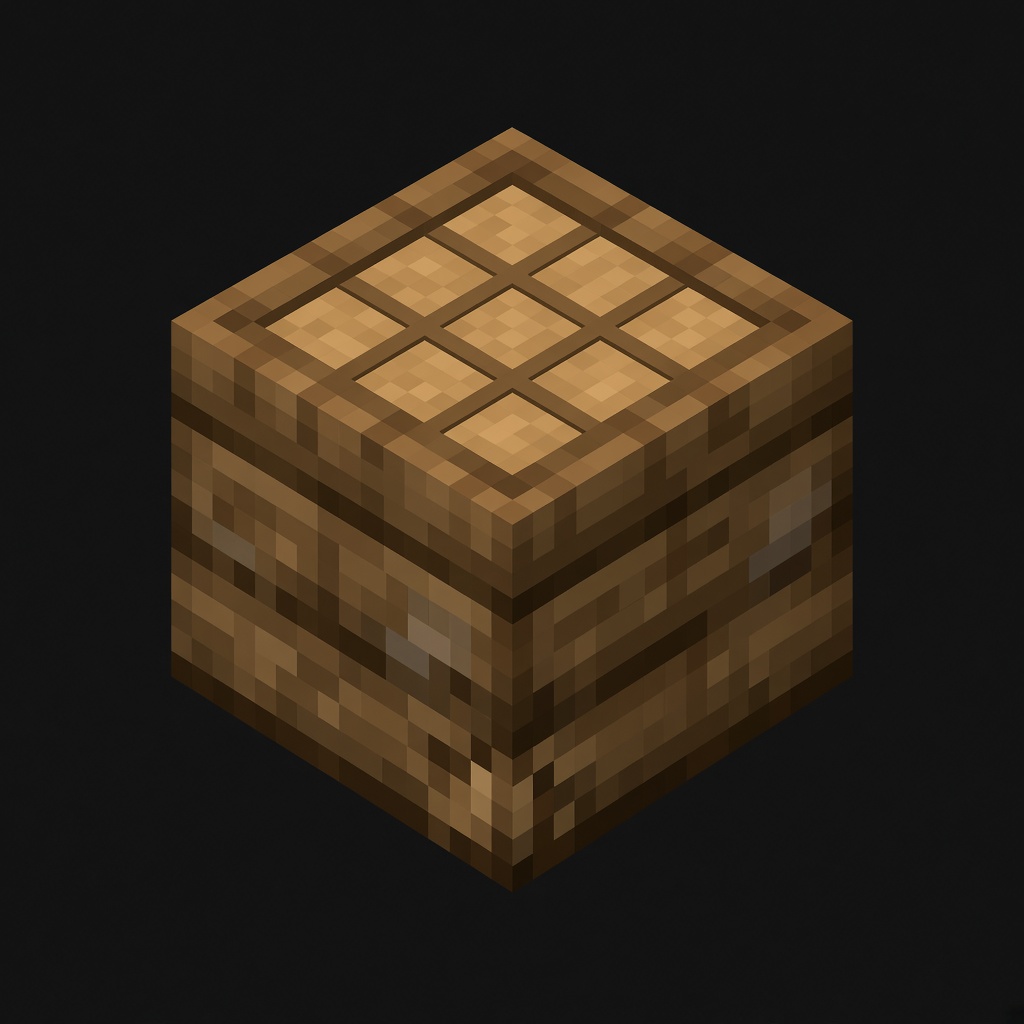
Crafting Table
Use + / − to stack blocks (that is the weight). Torch flips the weight negative.
Sunny
Homework
Rain
Bias
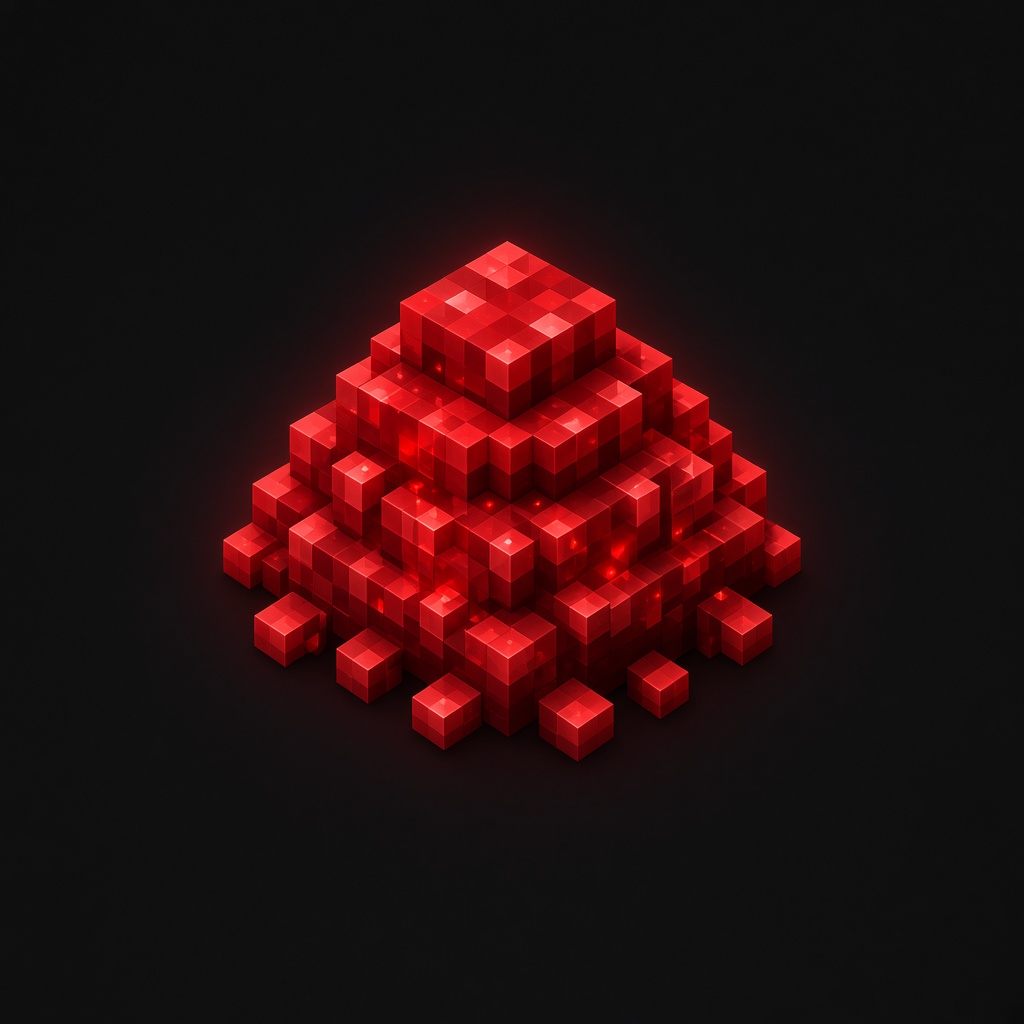
Redstone dust

YES — play!
50% sure
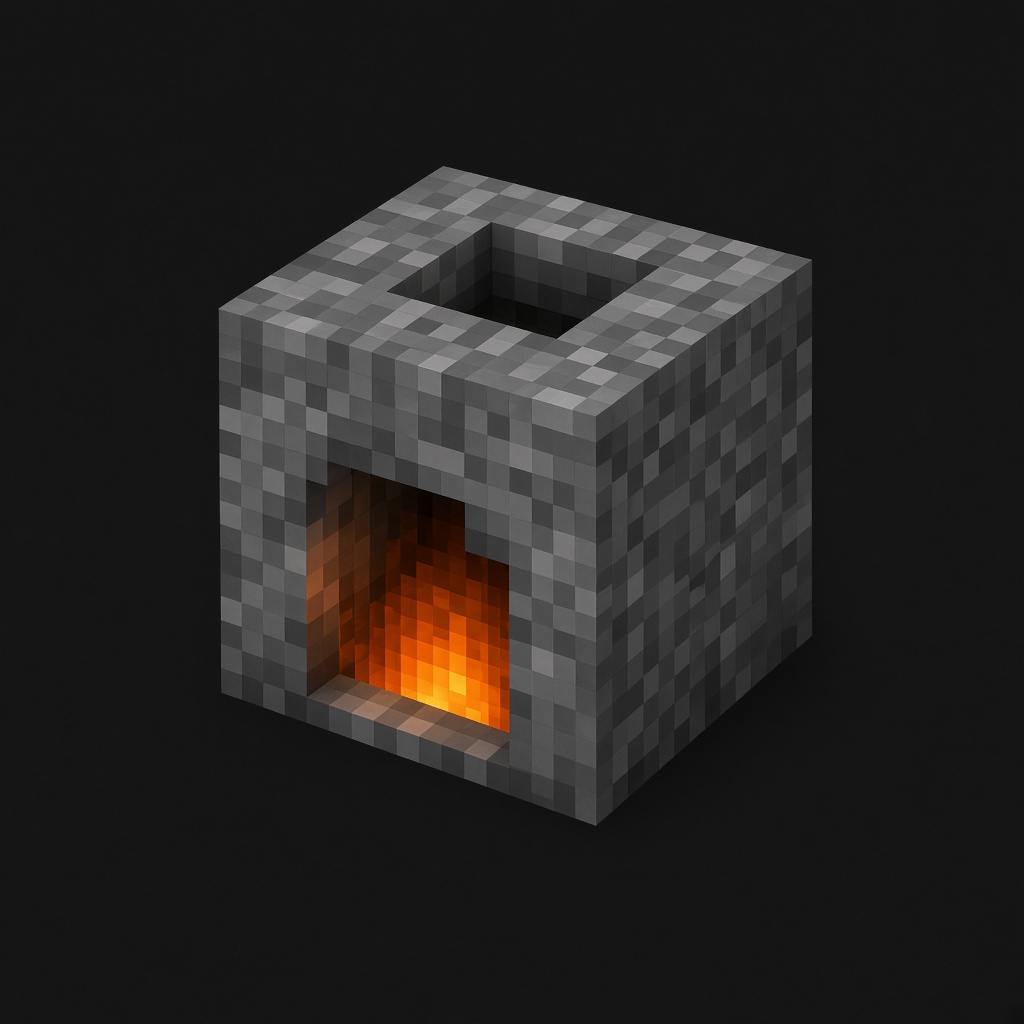
Furnace
Hearts (less loss = more hearts)

Loss: 0.7110
The chest of examples
Instead of writing rules like IF raining THEN stay inside, we filled a chest with examples and let the furnace discover the pattern.
| Sunny | Homework done | Raining | Play outside? |
|---|---|---|---|
| 1 | 1 | 0 | 1 |
| 1 | 0 | 0 | 0 |
| 0 | 1 | 1 | 0 |
| 1 | 1 | 1 | 0 |
| 0 | 1 | 0 | 1 |
| 0 | 0 | 0 | 0 |
1 means yes. 0 means no. Each row is one item in the training chest.
The recipe
Our whole AI model is only three weights and one bias.
In Minecraft words:
- Sunny block, Homework book, Rain cloud = inputs
- Stack count = how important that block is (weight)
- Redstone torch on a slot = that weight is negative
- Redstone dust = bias
- Crafting table = the neuron
- Furnace = training
Crafting recipe
Smelting (training)
At the start the stacks are almost random. Bolt guesses badly. We measure how wrong he is (that number is called loss, shown as empty hearts). Then the furnace nudges the stacks a tiny bit and tries again. Thousands of day/night cycles.
That redstone loop looks like this:
- Data
- Model
- Prediction
- Loss
- Gradients
- Update
- Repeat
Item crafted
When smelting finished, we put a new item in the Chest: the Play-Outside Compass.
Item crafted!
Play-Outside Compass

Points toward playing outside. Hates rain. Loves finished homework.
- Homework Boost I
- Rain Aversion II


Achievement Get!
First Craft
The first big lesson
A model's "knowledge" is just numbers (stack counts and torches).
The compass learned four numbers. Giant language models learn billions. The stacks get bigger and wilder, but this furnace loop stays underneath everything.
Teaching Franklin
We explained the neuron as a crafting recipe with three ingredients. Some stacks matter more. A redstone torch means "this block pushes the answer the other way."
After smelting, look at the rain slot. It should have a redstone torch (negative). Bolt was never told "rain is bad for playing outside." He inferred it from the chest of examples.
The command block
This is the exact program we ran on the computer (not just the browser craft bench):
 day01_neuron.py
import numpy as np
# -------------------------------------------------
# 1. OUR DATASET
# -------------------------------------------------
# Each row is:
# [sunny, homework_finished, raining]
X = np.array(
[
[1, 1, 0],
[1, 0, 0],
[0, 1, 1],
[1, 1, 1],
[0, 1, 0],
[0, 0, 0],
],
dtype=float,
)
# Correct answers:
# 1 = play outside
# 0 = don't play outside
y = np.array(
[
[1],
[0],
[0],
[0],
[1],
[0],
],
dtype=float,
)
# -------------------------------------------------
# 2. CREATE OUR MODEL
# -------------------------------------------------
np.random.seed(42)
# The neuron has three weights because we have
# three input features.
weights = np.random.randn(3, 1) * 0.1
# And one bias.
bias = np.zeros((1,))
# -------------------------------------------------
# 3. SIGMOID
# -------------------------------------------------
def sigmoid(x):
return 1 / (1 + np.exp(-x))
# -------------------------------------------------
# 4. TRAIN THE MODEL
# -------------------------------------------------
learning_rate = 0.5
epochs = 5000
for epoch in range(epochs):
# Make predictions
z = X @ weights + bias
predictions = sigmoid(z)
# Calculate the error
error = predictions - y
# Calculate gradients
weight_gradient = X.T @ error / len(X)
bias_gradient = np.mean(error)
# Update the model
weights -= learning_rate * weight_gradient
bias -= learning_rate * bias_gradient
if epoch % 500 == 0:
loss = -np.mean(
y * np.log(predictions + 1e-8)
+ (1 - y) * np.log(1 - predictions + 1e-8)
)
print(f"Epoch {epoch}: loss = {loss:.4f}")
# -------------------------------------------------
# 5. LOOK AT WHAT THE MODEL LEARNED
# -------------------------------------------------
print("\nLearned weights:")
print("Sunny:", weights[0][0])
print("Homework finished:", weights[1][0])
print("Raining:", weights[2][0])
print("Bias:", bias[0])
# -------------------------------------------------
# 6. TEST OUR MODEL
# -------------------------------------------------
def should_we_play(sunny, homework_finished, raining):
inputs = np.array([[sunny, homework_finished, raining]])
probability = sigmoid(inputs @ weights + bias)[0][0]
print(f"\nProbability of playing outside: {probability:.1%}")
if probability >= 0.5:
print("YES - Let's play outside!")
else:
print("NO - Stay inside!")
# Sunny + homework done + not raining
should_we_play(sunny=1, homework_finished=1, raining=0)
Run it yourself:
python3 -m venv .venv
source .venv/bin/activate
pip install numpy
python content/lab/days/day-001/day01_neuron.py
Watch the loss go down. That decreasing number is Bolt learning. Rain gets a torch.
 Dad's Lab Notes (tap to open)
- Wanted to learn
- Understand what 'training a model' really means at the smallest possible scale.
- Learned
- A neuron is weighted inputs plus bias, squeezed through sigmoid into a probability. Knowledge lives in the parameters. Loss falling means learning. Rain learns a negative weight.
- Built
- A single artificial neuron trained on a 6-row play-outside dataset, plus a crafting-table and furnace playground Franklin can twist.
- Confused me
- How the furnace knows the direction to nudge each stack (gradients). That is tomorrow.
- Failed
- Nothing catastrophic. Early random stacks made silly predictions, which is exactly what we wanted to see before smelting.
- Taught Franklin
- Franklin: a neuron is a tiny crafting recipe. Change the stacks and the YES/NO emerald flips. After training, rain gets a redstone torch by itself.
- Tomorrow
- Take one furnace tick apart by hand: loss, gradient, learning rate, stack update.
Tomorrow
How does the furnace know which block to add or remove? Tomorrow we learn about loss, gradients, and gradient descent.